The best commercial buildings I’ve worked on, from retrofits of 1970s office towers to ground-up research campuses, earned their reputation by making smart choices about where computation lives. Not just smarter thermostats, but a thoughtful split of responsibilities between the edge and the cloud. Put too much logic in the cloud and your building becomes laggy and fragile. Push everything to the edge and you miss the advantages of global insight, fleet learning, and long-term analytics. The art is in the partition.
This question usually arrives at the same time as the cable pulls. Building automation wiring, HVAC control cabling, integrated technology cabling — the low voltage decisions you make early will either enable agility for a decade or harden the wrong assumptions into the walls. I’ll walk through how I approach the edge versus cloud trade, where I have seen teams overreach, and what a practical deployment looks like when the dust settles.
What we mean by edge, and why it matters
In a digital building, the edge is where the physical world meets computation. Think smart control panels in electrical rooms, PoE lighting installation with embedded drivers, floor-level micro-servers riding your IDF racks, and gateway controllers that sit beside VAV boxes and chillers. Edge gear runs control loops, normalizes sensor data, enforces safety interlocks, and talks to disparate protocols without leaving the building. The cloud, by contrast, takes the long view. It aggregates data across sites, trains models, hosts dashboards, executes portfolio-level optimization, and keeps the history that helps a facility manager justify budget.
The simplest distinction is time. Edge acts on sub-second and sub-minute decisions that affect comfort, safety, and equipment life. Cloud makes hour, day, and year decisions that affect spending and sustainability. If a chilled water loop surges, you want the PID right there in the mechanical room. If you’re trying to forecast demand charges for July, you want deep history, weather models, and comparisons across your entire fleet.
Latency, reliability, and control loops
Every mechanical engineer I trust will say the same thing: do not push primary control loops to the cloud. Supply air temperature control, static pressure control, chiller staging, boiler lead-lag, fire life safety interlocks — these live at the edge, preferably inside controllers with deterministic behavior and local fallback. When a contractor once insisted on cloud-managed loops for economizer damper control to “simplify” updates, a minor ISP outage locked the dampers while outdoor air was spiking with wildfire smoke. That building’s complaint log told the story.
Good edge controllers can close loops in tens of milliseconds to a second. The internet cannot promise that. Even with a clean SD-WAN, transient latency and jitter creep. The right pattern is to keep the loops edge-closed, then let the cloud shape the setpoints and schedules. If you want a demand response event at 3:00 p.m., schedule it via cloud at noon, but let the edge manage the ramp with constraints that respect indoor air quality and equipment limits.
Where data should live, and how long
Data gravity shows up faster than most teams expect. Smart sensor networks multiply quickly: temperature, CO2, VOCs, occupancy, people counts, light levels, valve positions, pump speeds, tonnage, power. A mid-size office floor can produce tens of thousands of points. Across a campus, you’re in the millions. Push everything to the cloud at one-second resolution and your costs go sideways. Sample at five minutes and you lose the resolution needed to diagnose short cycling or hunting.
My rule of thumb: bifurcate. At the edge, keep high-resolution rolling buffers, 1 to 30 days, at the resolution that aligns with control and troubleshooting. In the cloud, store a downsampled baseline for the long tail — 1 to 15 minutes depending on the system, plus event-based bursts during anomalies. For critical assets, stream higher resolution on demand when diagnostics kick in. A good facility energy management system can orchestrate that shift dynamically, so you pay for detail only when it matters.
Security is not the same at the edge and in the cloud
Security models diverge. On-prem controllers, when properly segmented, can reduce blast radius. If someone compromises a public dashboard, it should not give them a path to a chiller PLC. Conversely, cloud services are often better at patch velocity and anomaly detection. A poor edge patch process quietly becomes the largest risk in the building.
Keep building systems on a dedicated OT network, separate from corporate IT. Use certificate-based mutual TLS for gateways, not shared passwords. Turn off open discovery protocols across network boundaries. If you must expose a service, do it through a broker model, not direct controller access. On projects where we enforced one-way outbound communication from the edge to the cloud, with queuing during outages, we avoided an entire class of risk. It also made compliance sign-off smoother, which matters more than engineers like to admit.
Connectivity, cabling, and the physical layer you can’t wish away
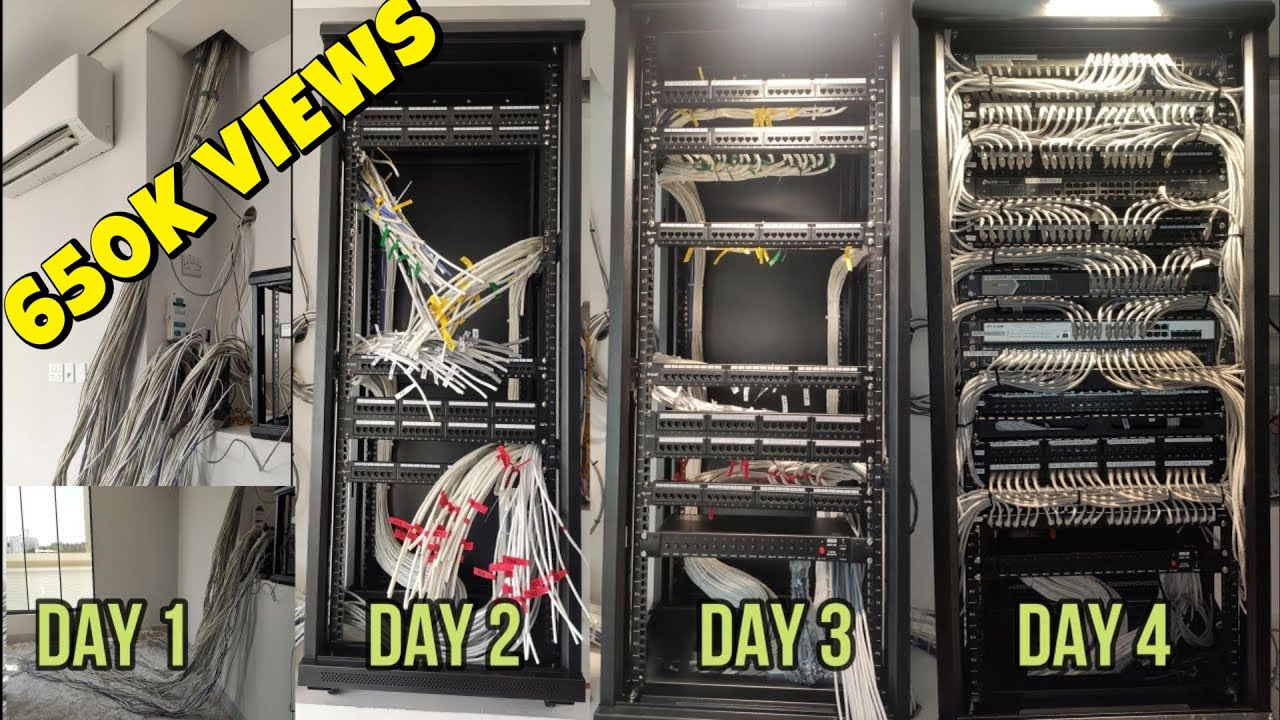
You cannot software your way out of a bad cable plant. Digital building infrastructure looks tidy on a slide, but it succeeds or fails on the basics: building automation wiring that’s labeled, separated, and tested; HVAC control cabling that respects noise and distance; integrated technology cabling that anticipates growth. Field issues I still see weekly include 24V control runs tucked alongside VFD output leads, PoE run lengths that ignore class power limits, and sensor loops that share returns, causing ghost readings.
When you plan PoE lighting installation, think thermals and power budgets. Class 4 circuits give you room, but your pathways, bundling, and switch placement determine whether fixtures brown out during peak draw. For IoT device connectivity, avoid mixing wireless for convenience with wired for reliability without a plan. Design RF coverage and specify channel plans so your smart sensor networks don’t step on each other. Pull a spare pair to anything you deem critical, even if the device speaks wireless today. In retrofits, that inexpensive redundancy saves weekends.
Low voltage automation integration is where silos show their seams. Security cameras, access control, lighting, AV, and BAS want different architectures. Put a cross-discipline review in the submittal process. On one lab project, we shifted two IDF locations by 15 feet to shorten uplinks and meet PoE thermal limits. That small move prevented long-term switch throttling and gave headroom for a second lighting zone per floor added later.
Protocols, gateways, and the cost of translation
Modern buildings speak a polyglot: BACnet, Modbus, MQTT, OPC UA, KNX, DALI, and the proprietary dialects manufacturers love. Gateways are inevitable, but scatter them mindlessly and you multiply failure points. Place translation at the edge where physical protocols terminate. Normalize payloads in a consistent semantic model before uplinking. I favor using device-level gateways to bridge physical protocols, then a floor or building gateway to publish MQTT with a clean namespace. It’s easier to secure and monitor a small number of well-understood gateways than fifty ad hoc dongles.
Semantic consistency pays off in the cloud. If every VAV “zone temp” becomes “tempz” on one floor, “z temp” on another, and “airtemp” across the campus, analytics will spend life in a thicket of aliases. Use standard tags or profiles. ASHRAE 223P and Project Haystack are worth the effort. Even a shop standard spreadsheet, kept current, beats tribal memory.
Practical partitioning: who does what, and when
Let the edge handle safety, comfort, and real-time orchestration. That includes PID loops, device interlocks, lead-lag rotation, fault-tolerant sequences, local trending for diagnostics, and fail-safe schedules. It also includes fast coordination, like linking occupancy sensors to lighting and HVAC setback with second-level response.
Let the cloud handle training and insight. That includes anomaly detection across months, energy baselining, maintenance recommendations, carbon reporting, fleetwide schedule policies, and optimization that benefits from weather forecasts and tariff calendars. Use the cloud to generate suggested setpoints and schedules, then push them down during windows where edge devices can sanity check before adoption. Keep a human in the loop on changes with occupant impact, and make rollbacks a click, not a project.
Here’s a simple rhythm that works in real sites. Edge runs daily with autonomy. Overnight, the cloud computes new strategies, tagged with reasons and bounds. The next morning, the edge pulls the approved updates, validates equipment status, and applies changes gradually with continuous verification. If sensors disagree or a device goes out of range, the edge pauses the change and holds the last good state.
When the cloud is the wrong place
I’ve been asked to put everything in the cloud more times than I can count. The appeal is obvious: easier updates, centralized control, pretty dashboards. But there are clear red lines.
- Critical alarms that demand immediate action should originate at the edge and reach local staff even if the WAN is down. If your chiller trips at 2 a.m., a text generated in a distant data center that never arrives is not an alarm. Life safety and fire alarm integrations belong strictly on certified, local systems with hardened paths. Mirror events upward for reporting, but never rely on remote logic to actuate a life safety sequence. Override authority for field technicians must continue to work on site. During commissioning, your tech needs to prove valves, read raw sensor values, and force fans regardless of cloud connectivity.
Cloud makes sense for planning and refinement, not for holding the keys to basic operation.
A note on updates, drift, and the long game
Buildings live longer than software teams. Ten years from now, your cloud vendor may be different, your controllers may be end-of-life, and your wiring will still be in the walls. Plan for that. Keep configurations portable. Exportable setpoints and sequences, documented point lists, and readable network diagrams cut the cost of vendor switches. When we renewed a service contract for a 15-year-old campus, the fact that their smart control panels stored readable YAML sequences and names in line with the as-builts saved months.
Drift is another silent tax. Techs override a VFD for a night shift, someone tweaks a PID gain, a temporary schedule lingers. At the edge, log every change with a username and reason. In the cloud, reconcile edge state with policy and flag deltas daily. Automate nudge flows that suggest cleanups to whoever has the wrench that week. None of this is glamorous. All of it keeps buildings honest.
Occupants, comfort, and the myth of a single optimal setpoint
Facility energy management systems excel at optimization, but people respond to averages like weather forecasts: helpful, not absolute. The best projects blend cloud guidance with occupant feedback, and they do it gently. Comfort is multi-factor, and sensors don’t capture everything. That corner conference room with a glass wall always bakes during afternoon sun, irrespective of the thermostat. Give occupants a way to vote, even if it’s as simple as “too warm” or “too cool” buttons. Aggregate that feedback in the cloud to identify persistent outliers and then feed targeted adjustments to the edge. When you fix it, tell people. The building’s reputation improves, which reduces noise in your signals later.
Commissioning with intent: get the partition right early
Commissioning traditionally focuses on functional tests and point-to-point checks. Add two more stages: data commissioning and network commissioning. Data commissioning verifies that point names, units, and tags are consistent from device to edge to cloud. Network commissioning validates QoS, VLANs, firewall rules, and failover behaviors that affect time-critical traffic. During a recent renovation, we staged a simulated WAN outage for three hours while the building ran at 60 percent occupancy. The edge kept everything steady. Alarms reached the on-site team. Cloud dashboards lagged, as expected. The test turned skepticism into trust.
Tie this back to your infrastructure. Verify that building automation wiring is labeled to standards and that every splice and termination is documented. For HVAC control cabling, confirm shield continuity and grounding, and test for induced noise near VFDs. With integrated technology cabling, check that power budgets on PoE switches can sustain worst-case draws, including inrush when an entire floor comes online after a power blip. These tests prevent the most frustrating “ghosts in the machine” later.
Retrofitting without starting over
Most portfolios can’t rip and replace. The good news is that edge-first improvements can be incremental. Start by inserting protocol gateways that expose clean, secure interfaces. Add a site-level data broker on a small server in the main equipment room. Use MQTT or OPC UA to unify disparate systems. Then layer a cloud analytics service that subscribes to the broker. This pattern puts the building in charge. If you switch cloud vendors, your edge stays intact.
For lighting, PoE retrofits can be surgical. Convert one floor, learn your power budgets and thermal behavior, and refine your approach. Use the results to justify or adapt the next phase. With IoT device connectivity, treat wireless as a complement, not a crutch. Battery-powered sensors are excellent for trials and snagging difficult runs, but critical signals should graduate to wired as you confirm value. Keep a change log that pairs cost with measured benefit, not just anecdotes, so you can defend the next phase during budget season.
A brief comparison you can use in design meetings
- Put fast control and safety at the edge. Loops, interlocks, local alarms, last-known-good schedules, and device health checks. Put slow insight and cross-site optimization in the cloud. Forecasts, analytics, predictive maintenance, policy rollouts, and reporting. Use the cloud to suggest and the edge to decide, with human oversight on high-impact changes. Keep networks segmented, secured, and documented, with outbound-only patterns to the cloud when possible. Design the cable plant for growth, with spare capacity, labeling, and pathways that accept higher PoE classes and additional VLANs.
What success looks like on day 365
A year https://www.lalowvoltagetechs.com/contact/ into a well-partitioned deployment, patterns emerge. Your maintenance tickets fall because faults are detected early. Your energy profile smooths as schedules and setpoints adapt seasonally without heroics. When the WAN hiccups, the building shrugs. When a chiller trend looks odd, your tech pulls a minute-level buffer from the gateway, not a hope from a distant database. Finance gets clean reports. Occupants complain less, not because the building is perfect, but because issues are addressed with a clear line of sight.
Smart control panels still do the heavy lifting. The cloud helps them get smarter month by month. The wiring you buried in the walls doesn’t become a constraint because you planned for integrated technology cabling, not standalone silos. Your IoT device connectivity is a design choice, not an accident of who showed up first. And your facility energy management systems become a daily tool, not a glossy screen no one touches.
Edge and cloud as a partnership, not a contest
Framing the decision as edge versus cloud is useful only long enough to draw the line. The goal is a partnership where each side does what it does best. You will change vendors. You will add new loads, like EV charging or a lab process. Tariffs will shift. Weather will be strange. A resilient design absorbs those changes without tearing open ceilings.
When you plan a PoE lighting installation, think ahead about occupancy signals doubling as building-wide inputs. When you map HVAC control cabling, think about how those loops will behave if a gateway reboots. When you specify smart sensor networks, plan for calibration, battery cycles if applicable, and naming you won’t regret. When you document low voltage automation integration, insist on diagrams that a new tech can read in five minutes. All of these decisions influence where intelligence belongs.
I often tell owners: buy things you can stand behind when they fail. Edge controllers that fail safe, cloud services that fail quiet, and a network that fails contained. If you get those failure modes right, most other choices become reversible. That is the real luxury in a building that never stops breathing.